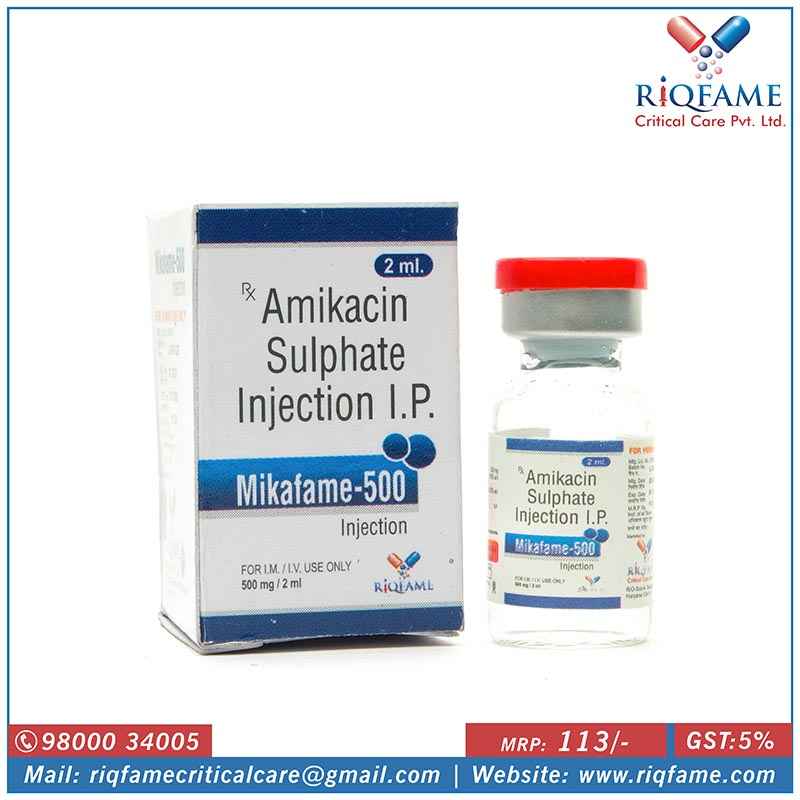
Amikacin Sulphate 500mg Injection I.P.: Trusted Aminoglycoside for Resistant Bacterial Infections
Amikacin Sulphate 500 mg is an aminoglycoside antibiotic. It blocks Bacterial Protein Synthesis at the 30S Ribosomal Subunit. Bacteria cannot survive without proteins. Most Resistance Enzymes fail to break it down. Doctors use it when other antibiotics fail. It treats Blood, Lung, Skin, Bone, and UTI infections. MIKAFAME-500 is strictly for IM/IV use, on prescription only.
Critical care distributors and hospital suppliers need a reliable Amikacin Sulphate injection source. Riqfame Critical Care has supplied injectable antibiotics since 2019. MIKAFAME-500 reaches partners through Riqfame’s growing PCD franchise network across Haryana, Bihar, Rajasthan, Uttar Pradesh, and other states. Partners receive district-wise monopoly rights with full marketing support on every order. New territories remain open for serious partners.
Product Overview: MIKAFAME-500
- Dose depends on weight and kidney function.
- Kidney patients need a lower dose.
- Prior hearing loss? Tell the doctor first.
- Avoid vancomycin, cisplatin, or furosemide.
- Stay well hydrated throughout the course.
- Store at room temperature, away from light.
Common Questions
Question 1. Can Amikacin Sulphate 500mg injection cause permanent hearing loss?
Answer. Yes, this is a documented risk with aminoglycosides. Longer courses and higher doses increase the likelihood. Patients with weak kidneys face a greater chance of damage. Doctors run hearing checks before and during treatment. Catching early signs and stopping promptly usually prevents lasting harm.
Question 2. Why does Amikacin require regular blood tests during treatment?
Answer. This drug works within a very narrow, safe range. Too low, and the infection doesn’t clear. Too high, and the kidneys or inner ear start taking damage. Blood tests let doctors adjust the dose in time. It is standard protocol, not a sign of complications.
Question 3. Why is staying hydrated important while on Amikacin injection?
Answer. Amikacin exits the body through the kidneys at high concentrations. Low fluid intake lets that concentration build up in renal tissue. Steady hydration keeps urine flowing and reduces kidney load. Hospitals run IV fluids alongside the injection for this reason. Patients at home should drink water consistently throughout the course.