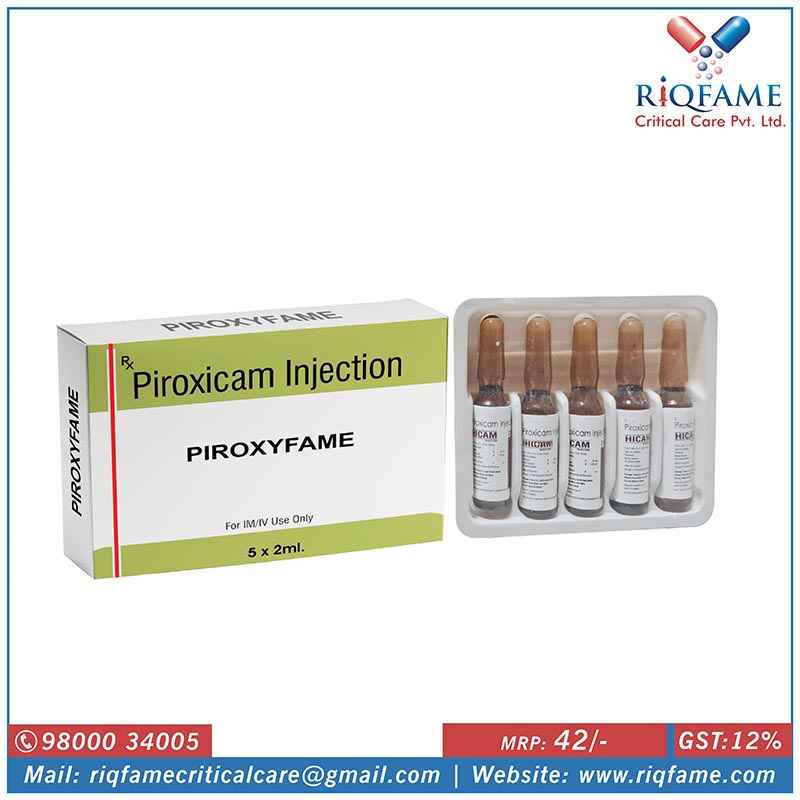
Piroxicam 20 mg Injection: Fast-Acting NSAID for Pain and Inflammation
Piroxicam 20 mg directly blocks COX-1 and COX-2 enzymes. This cuts PROSTAGLANDIN production at the source. Pain, swelling, and fever lose their trigger. The injectable form acts faster than any oral NSAID. Rheumatoid Arthritis, Osteoarthritis, Musculoskeletal Pain, and Post-Operative Inflammation all respond well. PIROXYFAME is for IM/IV use only, strictly on prescription.
Looking for a trusted Piroxicam injection franchise partner? Riqfame Critical Care offers district-wise monopoly rights that protect your area from competition. Promotional backup covers every partner from day one. Pain management injectables see strong, consistent demand in hospitals. DCGI-approved products and ISO certified quality back every vial dispatched. Warehousing remains stocked to ensure reliable, on-time delivery across all active zones.
Product Overview: PIROXYFAME
- Active peptic ulcer? This drug is contraindicated.
- Heart disease patients need careful medical evaluation.
- Severe kidney or liver impairment → avoid this drug.
- Alcohol during treatment → raises GI bleeding risk.
- Elderly patients → lower doses, close monitoring required.
- Store below 25°C → away from direct light.
Answers to Frequently Asked Questions
Question 1. Why is Piroxicam given as an injection instead of a tablet?
Answer. Oral tablets are absorbed slowly through the gut. This injection skips that process entirely. The drug reaches the bloodstream faster this way. Acute pain cases need that speed. Doctors prefer it for post-operative and severe inflammatory conditions.
Question 2. Can a piroxicam 20 mg injection cause stomach bleeding?
Answer. Yes, GI bleeding is a documented risk. COX-1 inhibition reduces the stomach’s protective lining. A history of ulcers makes this risk significantly higher. Elderly patients face a greater chance than younger adults. Any black or tarry stools during treatment need immediate review.
Question 3. Is Piroxicam injection safe for heart patients?
Answer. NSAIDs carry a cardiovascular risk. Prolonged use raises the chance of a heart attack or stroke. Existing heart disease raises that risk. Doctors assess cardiac history before prescribing. This drug is completely contraindicated after bypass surgery.