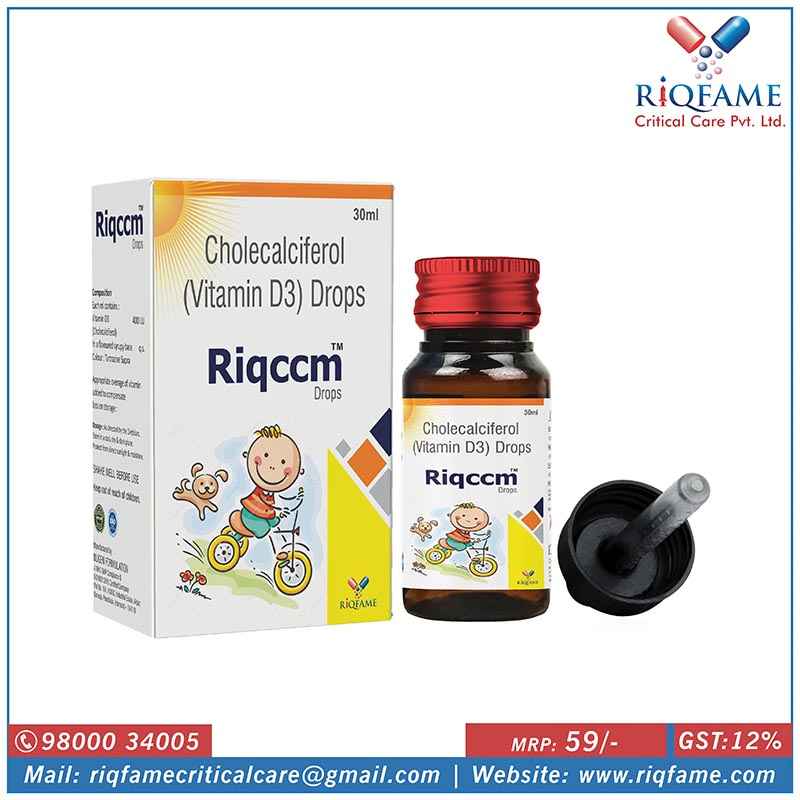
Cholecalciferol 400 IU Drops: Vitamin D3 Support for Infant Bone Health
Sunlight is the natural source of Vitamin D, but infants rarely get enough exposure. Cholecalciferol (Vitamin D3) 400 IU Oral Drops fill that gap. It improves calcium and phosphorus absorption from the gut. This supports bone mineralization and tooth development. It also supports normal immune function during early growth. Pediatricians prescribe it to prevent Vitamin D deficiency and rickets. One dose daily, given directly or mixed with milk. Shake well before use, dose with the calibrated dropper provided.
Vitamin D3 stays on every pediatric prescription pad, sooner or later, that steady need is what keeps this category moving. Riqccm sits within Riqfame Critical Care’s pediatric drops range, backed by large, well-maintained warehouses and a wide marketing network that keeps stock flowing without delays. Clear business policies and low risk make the entry decision simple for new partners too. Curious about the territories Riqfame currently covers? Check the areas served across India before you pick yours. Parents ask for a reliable Vitamin D3 supplement often. Make sure yours is the one they get. Get in touch with Riqfame Critical Care.
Product Overview: Riqccm Drops
- Pediatric use, under medical guidance.
- Avoid high calcium or Vitamin D levels.
- Not for malabsorption syndrome without advice.
- Use only the dropper provided.
- Discontinue if nausea or vomiting persists.
Common Queries, Clear Answers
Question 1. Why do infants need Vitamin D3 drops even with a balanced diet?
Answer. Diet doesn’t cover it, not fully anyway. Sunlight is where the body gets most of its Vitamin D, and infants simply don’t get enough exposure. Breast milk falls short here too, it carries very little on its own. That gap is why doctors bring supplementation into the picture early on.
Question 2. Can too much Vitamin D3 cause harm?
Answer. It can, yes, if the dose goes beyond what’s prescribed. Too much pushes calcium levels up in the blood. Nausea and other issues can follow from that. Staying within the pediatrician’s recommended amount avoids the problem entirely.
Question 3. How long does a child usually need these drops?
Answer. Varies quite a bit, honestly. Sun exposure and diet both play a role. Some infants take it through their whole first year. Others need it longer if a deficiency shows up on testing. The pediatrician tracks growth and makes that call.