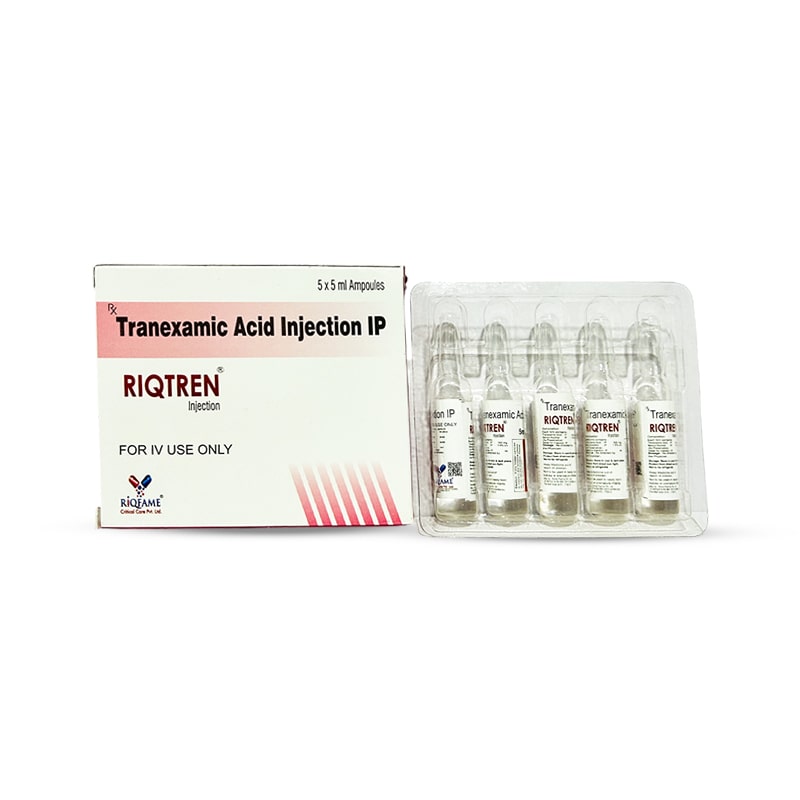
Tranexamic Acid 100mg Injection: Fast Bleeding Control for Surgical and Trauma Cases
Tranexamic Acid 100 mg Injection is a synthetic lysine derivative. It belongs to the antifibrinolytic drug class. The compound blocks plasminogen from turning into plasmin. This stops the breakdown of existing blood clots. Clots stay stable at the bleeding site longer. Surgeons use it to reduce blood loss during major operations. It also helps with heavy menstrual bleeding and dental extractions in hemophilia patients. Trauma cases benefit when given within three hours of injury. This works fastest through the IV route.
Trauma centres, surgical wards, and gynaecology departments keep this injectable moving fast. Riqfame Critical Care runs on a PCD Pharma Franchise model, built around low entry investment and a ready product line. Every partner works in a locked territory, free from any brand clash in their zone. Field support comes standard, too: visual aids, product cards, and sample kits reach you with the first order. Orders get processed and dispatched on time, so stock never runs dry in your market. Curious what separates a genuine franchise offer from an empty promise? Check the WHO-GMP certification checklist before signing anywhere.
Building a bleeding-control range for your territory? RIQTREN fits right into a critical care portfolio doctors already trust. Call Riqfame Critical Care today and get this injectable working for your business.
Essential Information
- History of blood clots or thromboembolism: avoid this injection.
- Active bleeding in the brain: strictly contraindicated.
- Kidney impairment needs a lower, adjusted dose.
- Not to be given more than 3 hours after severe trauma.
- Avoid combining with hormonal contraceptives without medical advice.
- Report blurred vision or vision changes immediately.
- Store below 25°C, away from direct light.
Let’s Answer Your Questions
Question 1. Why is this injection given before or during surgery?
Answer. It reduces blood loss during the procedure. Surgeons use it in orthopedic, cardiac, and major surgeries. Less bleeding means fewer transfusions are needed. It’s given as a preventive step, not just for active bleeding. Timing matters, so it’s usually started before the incision.
Question 2. How is this different from a regular injection used to stop bleeding?
Answer. Not all bleeding control drugs work the same way. This one blocks clot breakdown rather than helping clots form. That makes it useful for controlled, ongoing bleeding, like heavy periods or surgery. Fresh injury bleeding may need a different approach altogether. The doctor picks the right option based on the cause.
Question 3. How is this different from tablets used for heavy periods?
Answer. Same active ingredient, different speed. Injection works faster since it skips digestion entirely. Hospitals use it for acute, heavy bleeding episodes. Tablets suit milder, ongoing menstrual bleeding at home. The doctor picks the form based on how urgent the bleeding is.