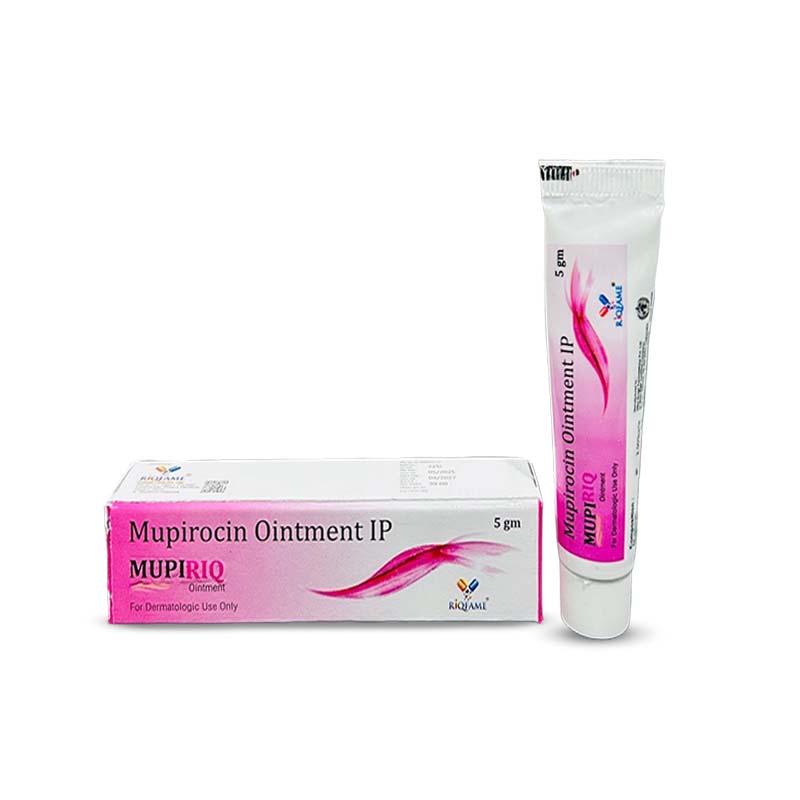
Mupirocin 2% Ointment: Topical Antibiotic for Bacterial Skin Infections
Not every skin infection calls for a systemic antibiotic. Sometimes it’s contained right at the surface, and that’s where Mupirocin 2% W/W Ointment does its job. The mechanism is fairly specific: it blocks the proteins bacteria need in order to grow, working mainly against Staphylococcus aureus and Streptococcus pyogenes. Impetigo, folliculitis, and infected wounds, these are the cases where doctors reach for it most. A thin layer on clean, dry skin, two to three times a day, is the standard routine. One thing worth sticking to: finish the full course, even once the skin starts looking better.
Topical antibiotics stay in steady rotation across dermatology clinics and general practices alike. Mupiriq sits within Riqfame Critical Care’s dermatology and skin care line for that reason. Territory rights go to one partner only, no second seller is competing for the same brand nearby. Entry costs stay reasonable, and margins in this segment tend to run higher than average. New to the franchise process? There’s a step-by-step guide that walks through exactly how it works.
Every clinic needs a topical antibiotic on the shelf. Reach out to Riqfame Critical Care and make sure yours is the one supplying it.
Product Overview: Mupiriq Ointment
- External use only. Avoid the eyes, nose, and mouth.
- No effect on fungal or viral infections.
- Rash or swelling? Stop immediately.
- Wash hands before and after use.
- Store away from sunlight, at room temperature.
Questions People Often Ask
Question 1. What skin conditions does this ointment treat?
Answer. Impetigo is probably the most common one, especially among children. Folliculitis and boils show a good response, too. Minor infected cuts and small wounds fall under this as well. A doctor usually confirms the infection type first.
Question 2. Can this ointment be used on a fungal infection?
Answer. No, it’s built for bacteria specifically. Fungal infections call for an entirely different kind of treatment. Applying it here won’t do much good. Best to let a doctor confirm what’s actually causing the infection.
Question 3. Is this ointment safe for children?
Answer. Yes, pediatric use is fairly common with this one. Impetigo especially tends to show up in younger kids. The way it’s applied doesn’t really change across age groups. A doctor will still set the right frequency for a child.